
The Toyota HiAce is the most reliable and easiest van to service across regional Australia. The VW Transporter is the most car-like to drive and park. The Mercedes-Benz Sprinter is the only one of the three that lets most adults stand up inside without a pop-top, making it the pick for full-time vanlife. The right choice depends on how often you travel, where you go and how much space you need.
Key Takeaways
- Toyota HiAce: best all-rounder. Reliable, rear-wheel drive and serviceable in almost every Australian town.
- VW Transporter: best daily driver. Compact, comfortable and easy to park, but has the smallest interior.
- Mercedes Sprinter: best for full-time living. High-roof models give genuine stand-up headroom.
- The HiAce and Transporter need a pop-top for standing room, so budget for one from the start.
- Always check the van’s GVM (gross vehicle mass) against the weight of your finished build, water, gear and passengers.
- Pop-tops, extra seats and structural changes may need engineering certification before registration.
This guide compares the three most popular conversion vans in Australia on the things that matter for a build: interior space, headroom, drivetrain, reliability, running costs and how well each copes with Australian roads. It also covers which van suits which kind of traveller, compliance considerations and what to check before you buy.
Why Your Base Van Matters
The base van decides your layout, your budget and how comfortable you will be for years. It is the one part of a campervan conversion you cannot easily change later, so it pays to choose carefully before you buy a single sheet of plywood.
Four questions narrow the choice quickly:
- Headroom: do you need to stand up inside, or is a pop-top acceptable?
- Length: do you want a fixed bed, a kitchen and a bathroom, or just a bed and storage?
- Where you travel: will you mostly stay near cities, or head into remote areas where parts and mechanics are scarce?
- Budget: how much can you spend on the van, the build and ongoing servicing combined?
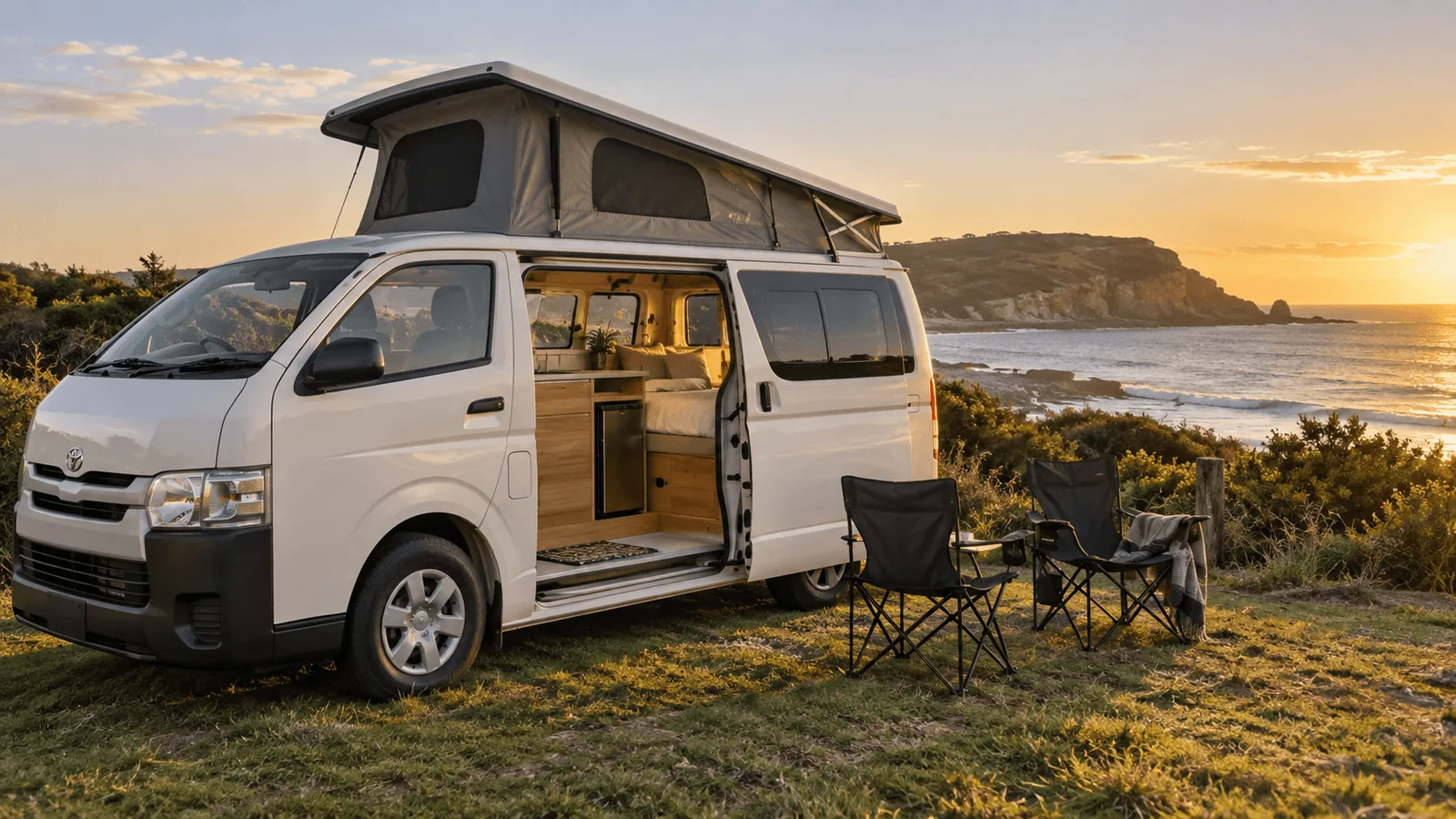
Toyota HiAce: The Reliable All-Rounder
The Toyota HiAce is Australia’s best-known workhorse van, and that is exactly why so many converters choose it. It is tough, simple and easy to service almost anywhere, from Broome to Bairnsdale.
The current generation is sold in long-wheelbase (LWB) and super-long-wheelbase (SLWB) versions, with a turbo-diesel engine and rear-wheel drive. Most adults cannot stand upright inside, so the majority of HiAce conversions add a pop-top roof.
The HiAce has a huge aftermarket in Australia. Pop-tops, campervan fit-outs, flares, suspension upgrades and conversion parts are widely available, which keeps build costs and lead times down.
HiAce Pros
- Excellent reliability reputation and strong resale value
- Parts and mechanics available in almost every regional town
- Rear-wheel drive handles heavy loads and gravel roads well
- Large local aftermarket of conversion parts and pop-tops
HiAce Cons
- No stand-up headroom without a pop-top
- Narrower interior than the Sprinter, so beds usually run lengthways
- Used prices stay high because demand is strong
Best choice: HiAce. Couples and solo travellers who want a dependable van for weekends and lap-of-Australia trips, and who are happy to add a pop-top for headroom.
VW Transporter: The Car-Like Cruiser
The Volkswagen Transporter has decades of camper history behind it and is still the van that feels most like driving a car. It is compact enough for city streets, underground car parks and tight campsites, which makes it a strong choice if the van is also your daily driver.
Front-wheel drive is standard, with 4MOTION all-wheel drive available on some models. Focus RV regularly completes VW pop-top and awning installations. Note that the newest-generation Transporter shares its platform with the Ford Transit Custom, so confirm exactly which model you are comparing when looking at new and used vans.
Transporter Pros
- Comfortable, quiet and easy to drive and park
- 4MOTION all-wheel drive available on some models
- Classic camper styling and a strong enthusiast community
- Pop-top conversions are well established
Transporter Cons
- Smallest interior of the three, so storage is tight
- Needs a pop-top for standing room
- Parts and repairs can cost more than the HiAce, and regional servicing is patchier
Best choice: Transporter. Weekend adventurers and couples who want one vehicle for both the school run and the long weekend away.
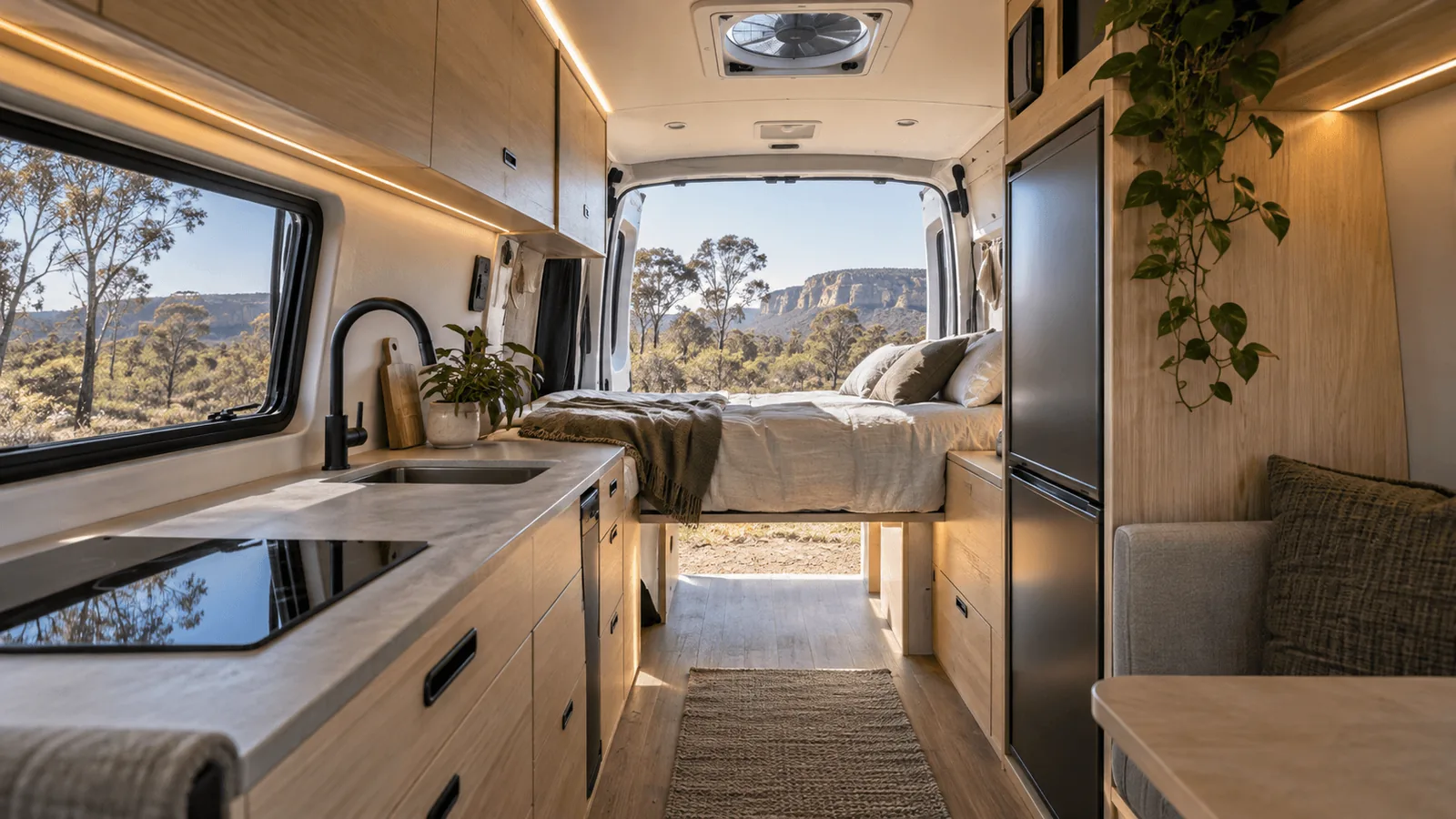
Mercedes-Benz Sprinter: The Full-Size Home
The Sprinter is the van most full-time vanlifers aim for. In high-roof form most adults can stand up inside, and the longer versions have room for a fixed bed, a proper kitchen, a bathroom and even a second sleeping area, plus space for larger lithium batteries and a battery management system.
It comes in several lengths and roof heights, with rear-wheel drive and all-wheel or four-wheel-drive variants. The trade-off is cost: the Sprinter is the most expensive of the three to buy, service and repair, and servicing is mostly limited to Mercedes-Benz dealers and specialists.
Sprinter Pros
- Genuine stand-up headroom in high-roof models
- Most space for layouts, storage, water tanks and batteries
- Refined and comfortable on long highway drives
- 4×4 variants for serious off-road touring
Sprinter Cons
- Highest purchase, servicing and repair costs
- Specialist servicing can be hard to find in remote areas
- Harder to park and too tall for many car parks and drive-throughs
- A bigger build means a bigger budget and more weight to manage
Best choice: Sprinter. Full-time or long-term travellers, families and anyone who wants a true home on wheels with standing room.
HiAce vs Transporter vs Sprinter at a Glance
| Toyota HiAce | VW Transporter | Mercedes Sprinter |
|---|---|---|
|
|
|
Key Differences Between the HiAce, Transporter and Sprinter
The biggest difference is headroom: only the high-roof Sprinter lets most adults stand up without a pop-top. After that, the choice comes down to size, drivetrain and how easily you can get the van serviced where you travel.
| Feature | Toyota HiAce | VW Transporter | Mercedes Sprinter |
|---|---|---|---|
| Size class | Mid-size (LWB, SLWB) | Compact / mid-size | Large (multiple lengths and roofs) |
| Stand-up headroom | No, pop-top recommended | No, pop-top needed | Yes, high-roof models |
| Drivetrain | Rear-wheel drive | FWD, 4MOTION AWD option | RWD, AWD / 4×4 variants |
| Reliability reputation | Excellent | Good | Good, costly repairs |
| Regional servicing | Easiest | Moderate | Limited to dealers / specialists |
| Aftermarket parts | Very large | Large | Large |
| Purchase and running cost | Moderate | Moderate to high | Highest |
| Parking and city driving | Easy | Easiest | Hardest |
| Best for | Touring, remote travel | Daily driver, weekends | Full-time living, families |
Prices and specifications change with each model year. Check current figures with a dealer before you buy.
Which Van Suits Your Travel Style?
The HiAce suits long touring trips on a sensible budget. The Transporter suits people who drive their van every day. The Sprinter suits anyone living on the road full-time. Here is how they compare across the most common scenarios.
Weekend Getaways
Best choice: VW Transporter or Toyota HiAce. Both are easy to drive, fit in normal car parks and make great weekend campers with a pop-top. Choose the Transporter if the van doubles as your everyday car, or the HiAce if you want the toughest, simplest option.
Lap of Australia
Best choice: Toyota HiAce. Reliability and easy access to parts matter more than luxury when you are thousands of kilometres from a city. The HiAce can be serviced almost anywhere, and its rear-wheel drive copes well with heavy loads and gravel roads.
Full-Time Vanlife
Best choice: Mercedes Sprinter. Standing room makes a huge difference when the van is your home. The Sprinter has space for a fixed bed, full kitchen, shower or toilet and plenty of battery and water capacity.
Families
Best choice: Mercedes Sprinter. Longer Sprinter models have room for extra sleeping space and additional seating. Any seat used while driving must be properly anchored and fitted with compliant seatbelts.
Off-Road and Remote Travel
Best choice: HiAce or Sprinter 4×4. The Sprinter 4×4 is the most capable off the beaten track, but the HiAce is easier and cheaper to repair remotely. Many travellers weigh capability against the risk of waiting days for specialist parts.
Can You Add a Pop-Top to a HiAce or Transporter?
💡 Tip: A pop-top solves the headroom problem. Pop-top roofs are the most common way to add standing room to a HiAce or Transporter. They lift to give standing height at camp and fold down for driving, keeping the van low enough for car parks and garages.
A pop-top is a structural modification because it involves cutting the roof. In many states it needs to be installed by a qualified fitter and may require engineering certification before the van is roadworthy. Melbourne travellers can talk to the team about campervan conversions in Melbourne, including pop-top installs.
Include the pop-top in your budget from day one, and ask the installer whether their product comes with the certification paperwork your state requires.
Check the GVM Before You Buy
Every van has a GVM (gross vehicle mass), the maximum it can legally weigh fully loaded. The payload you can carry is the GVM minus the van’s tare (empty) weight.
Your finished build, water, fuel, gear and passengers must all stay under the GVM. Weigh your van at a public weighbridge once it is built and packed. Driving over GVM is unsafe and may breach Australian road rules and void your insurance.
Water is heavy. Every litre weighs about 1 kg, so a 100-litre tank adds roughly 100 kg when full.
Batteries, timber and appliances add up fast. Choose lighter materials where you can, especially in smaller vans with less payload.
Some vans can have their GVM increased through an approved upgrade. Check with a specialist before you rely on this.
Compliance and Registration in Australia
A campervan conversion changes your vehicle, and some changes need approval before the van can be registered. Requirements vary between states and territories, so always check with your state road authority before you start building.
Modifications to light vehicles in Australia are guided by Vehicle Standards Bulletin 14 (VSB 14). Common items that may need certification include pop-tops, added or relocated seats, structural changes and GVM upgrades.
| Item | Who Does It | Why It Matters |
|---|---|---|
| Pop-top or roof cut | Qualified installer/engineer | Structural change to the body |
| Extra seats and seatbelts | Licensed installer, engineer sign-off | Occupant safety in a crash |
| Fixed LPG gas system | Licensed gas fitter | Gas compliance certificate required |
| 240-volt electrics | Licensed electrician | Electrical safety compliance |
| GVM upgrade | Approved provider | Legal weight limit changes |
| Re-registering as a motorhome | State road authority | Insurance and registration category |
Have questions about compliance for your build? See the Focus RV FAQs or contact the team. Keep every receipt, certificate and engineering report together. They make registration, insurance and resale much easier.
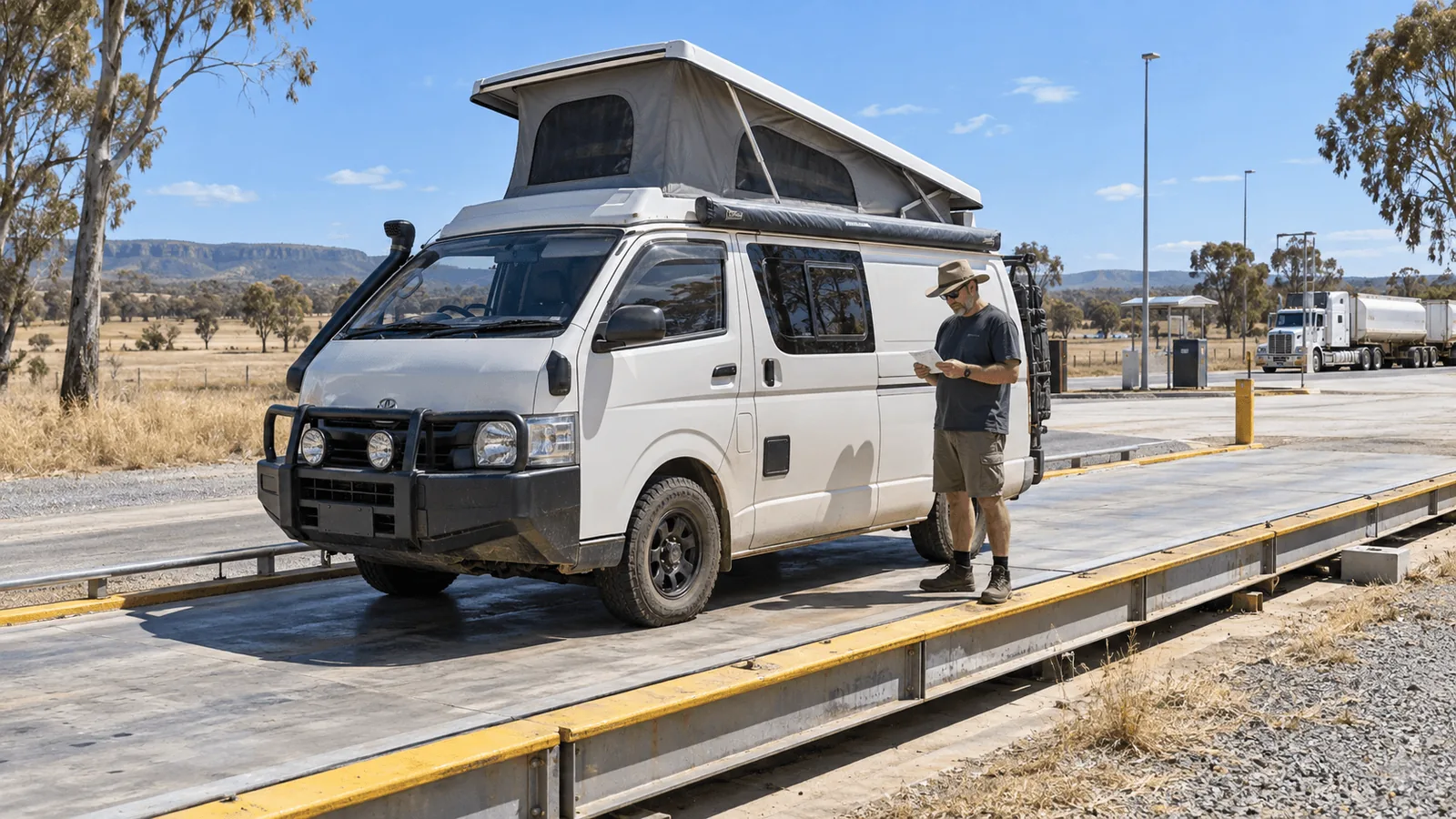
Tips Before You Buy
- Get a pre-purchase inspection. Look for rust, service history and signs of hard commercial use, especially on ex-fleet vans.
- Rent before you buy. A weekend in a hired campervan shows you what size and layout you really need.
- Test drive with a load. A van feels very different fully built and packed than it does empty on a dealer’s lot.
- Plan the layout first. Measure your must-haves (bed length, fridge, storage) before choosing the van, not after.
- Budget for the whole build. The van is only part of the cost. Include the pop-top, electrics, insulation and certification.
Campervan Conversions at Focus RV
Focus RV is a Melbourne-based caravan and RV specialist in Campbellfield. The team designs and builds complete and partial campervan conversions across all three vans in this guide, plus other popular platforms.