
A standard caravan service focuses on the running gear that keeps you safe on the road: wheel bearings, hubs, brakes, suspension, chassis, handbrake and tyres. Most caravans should be serviced every 10,000 km or every 12 months, whichever comes first. Gas, electrical, water and seal checks are often added on top, depending on your van and how you travel.
Key Takeaways
- Service your caravan every 10,000 km or every 12 months, whichever comes first.
- A standard service covers wheel bearings, hubs, brakes, suspension, chassis, handbrake and tyres.
- Wheel bearings are repacked with grease and seals replaced. Worn bearings are replaced as required.
- Gas, 12V and 240V electrical, water systems and seals are separate checks worth adding, especially before a big trip.
- Some manufacturers require specific annual checks, such as a water ingress test, to keep your warranty valid.
- At Focus RV, a single axle service starts from $425 + parts and a tandem axle service from $525 + parts.
This guide explains exactly what happens during a caravan service, the extra checks worth adding, the warning signs that your van needs attention, and what servicing costs. Book a caravan service at Focus RV to keep your van road-ready.
What Is a Caravan Service?
A caravan service is a scheduled inspection and maintenance of the parts that carry, stop and support your caravan. Unlike a car, a caravan has no engine, so the service focuses on the running gear: the wheels, bearings, brakes, suspension and chassis.
These parts work hard on Australian roads. Heat, dust, corrugations, water crossings and long highway runs all wear down bearings, seals and brakes over time. A regular service catches small problems before they turn into a roadside breakdown or a dangerous failure.
A service is different from a repair. A service is preventative maintenance done on a schedule, while a caravan repair fixes something that has already failed or been damaged.
How Often Should You Service Your Caravan?
💡 Tip: 10,000 km or 12 months. Service your caravan every 10,000 km or every 12 months, whichever comes first. If your van sits unused for long periods, still service it yearly. Grease can dry out, and seals can perish even when the van isn’t moving.
Consider servicing more often if you regularly tow on dirt or corrugated roads, cross creeks or beaches, or carry heavy loads. Always service before a big trip, such as a lap of Australia or a long outback journey.
The Complete Caravan Service Checklist at a Glance
| Standard Service | Worth Adding |
|---|---|
|
|
What’s Included in a Standard Caravan Service?
A standard caravan service covers eight tasks across six areas. Here is what each one involves and why it matters.
1. Wheel Bearings and Hubs
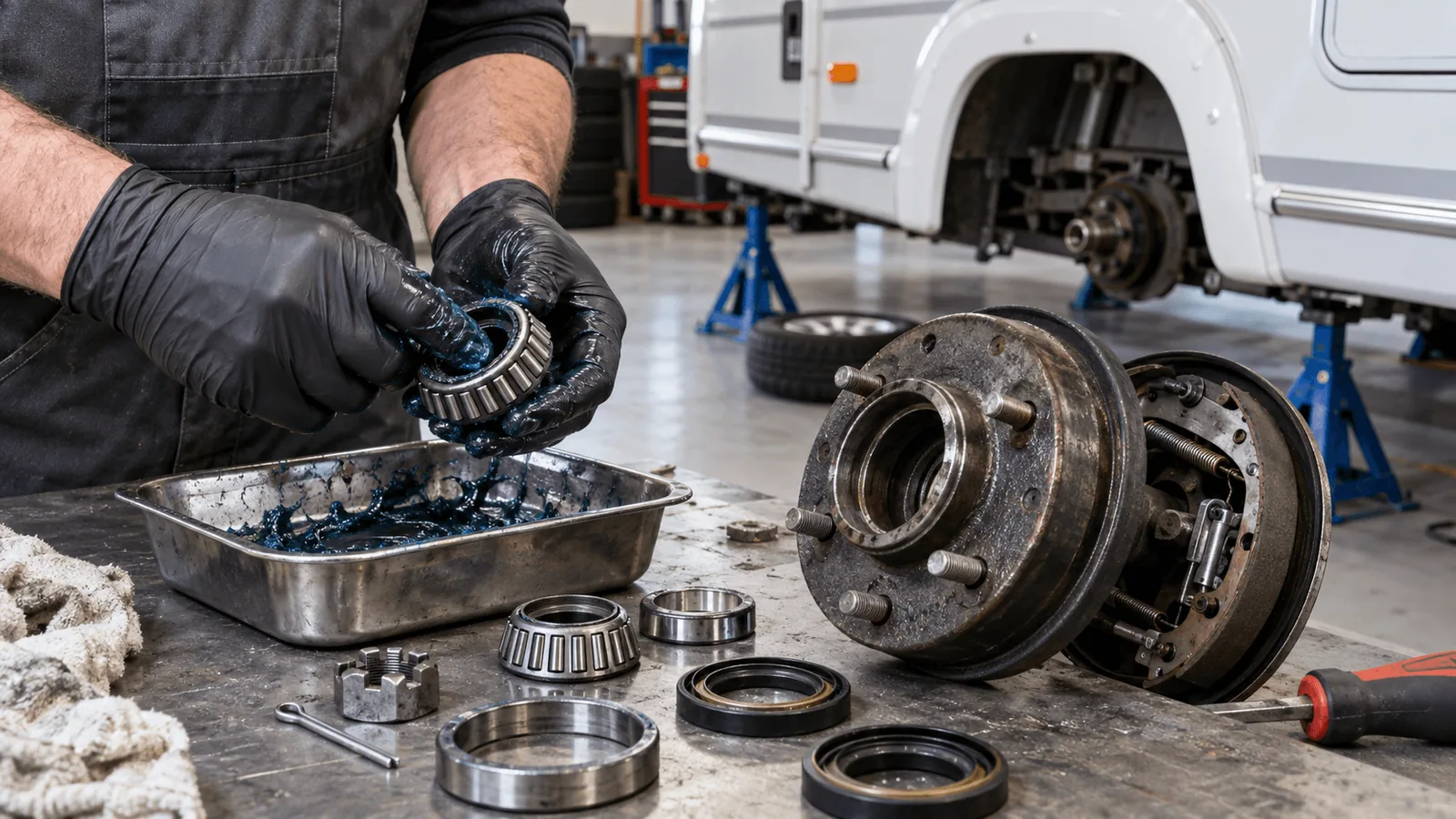
The technician removes the hubs, then cleans and inspects the wheel bearings, backing plate and brake pads. Wheel bearings let your wheels spin smoothly under load. If they run dry or wear out, they can overheat and seize, which can cause a wheel to lock or come off.
The bearings are then repacked with fresh grease and the seals replaced, with worn bearings replaced as required. Finally, the hub assemblies are reassembled and painted to protect them from corrosion.
2. Brakes
Brake operation is checked and adjusted if required. Most caravans use electric brakes, which work with a brake controller in your tow vehicle. Worn pads or poorly adjusted brakes increase stopping distances and put extra strain on your car’s brakes.
3. Suspension
Suspension components are inspected and greased as required. This includes springs, shackles, bushes and any moving parts. Worn suspension affects how the caravan tracks behind your vehicle and can lead to uneven tyre wear.
4. Chassis
All chassis components are inspected and adjusted or greased as required. The technician looks for cracks, rust, loose fittings and damage from stones or corrugations, particularly on the drawbar and around the axle mounts.
5. Handbrake
The handbrake is inspected and adjusted as required, so the caravan stays securely in place when parked or unhitched on a slope.
6. Tyres
Tyre condition and wear are inspected. The technician looks for uneven wear, cracking, bulges and low tread. Uneven wear can also point to alignment or suspension problems that need attention.
Caravan Service Checklist Table
Use this table as a quick reference for what a standard service covers and why each item matters.
| Area | What’s Checked | Why It Matters |
|---|---|---|
| Hubs | Removed, cleaned, inspected, reassembled and painted | Prevents corrosion and hidden wear |
| Wheel bearings | Cleaned, repacked with grease, replaced if worn | Prevents overheating and seized wheels |
| Bearing seals | Replaced | Keeps grease in and dirt and water out |
| Brakes | Pads and backing plate inspected, operation adjusted | Safe stopping distances |
| Suspension | Inspected and greased | Stable towing and even tyre wear |
| Chassis | Inspected, adjusted and greased | Structural safety on rough roads |
| Handbrake | Inspected and adjusted | Van stays put when parked |
| Tyres | Condition and wear inspected | Grip, blowout prevention |
Extra Checks Worth Adding to Your Service
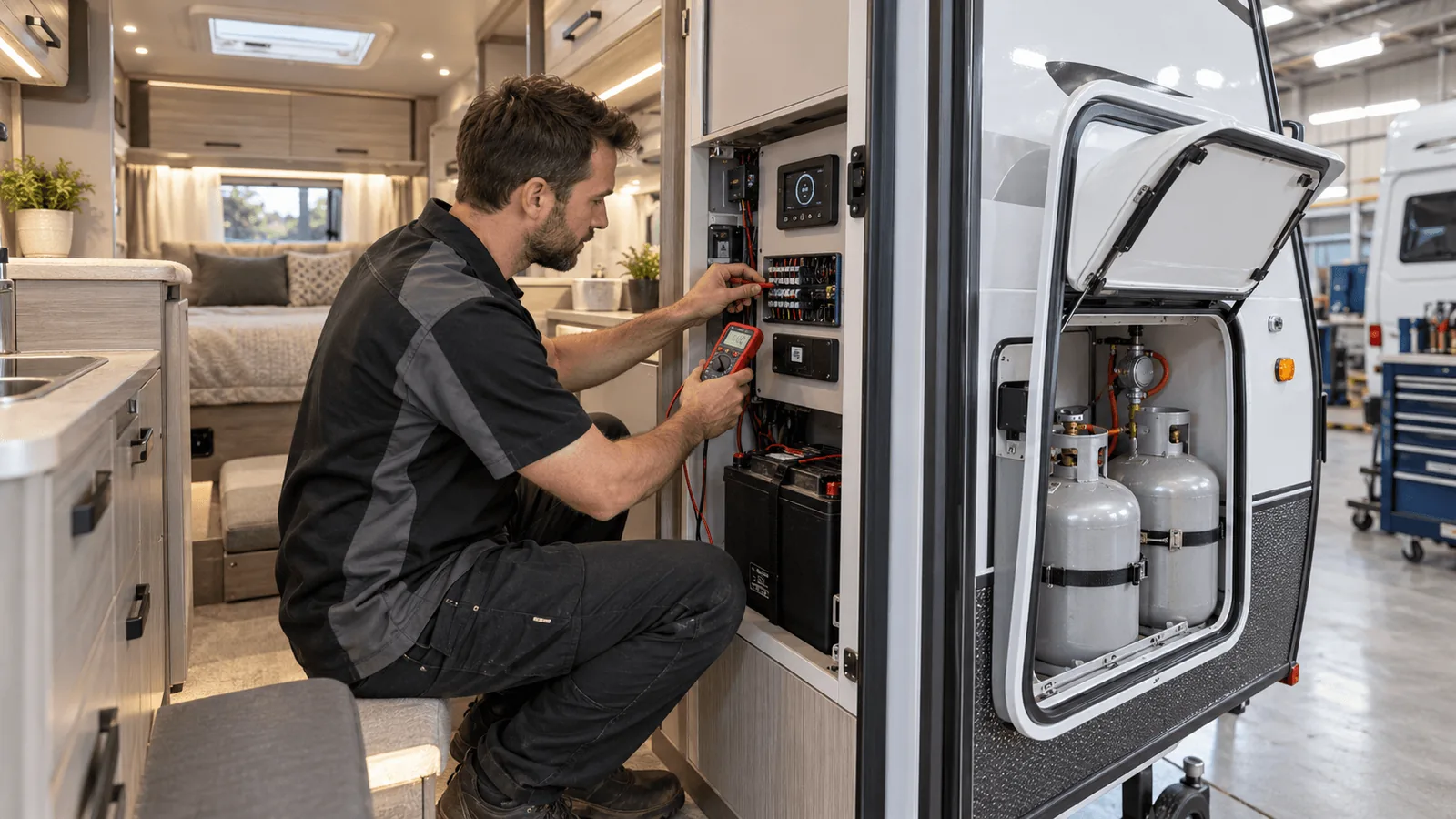
The standard service covers the running gear. Your caravan’s living systems need attention too, especially before a long trip. Ask your service centre which of these checks are included and which are extra.
Gas System
Best choice: Get it checked by a licensed gas fitter. Gas leaks are a serious safety risk. A gas check covers the cylinders, regulator, hoses, fittings and appliances. In many states, gas work must be done and certified by a licensed gas fitter.
Electrical, Batteries and Solar
Best choice: Check before every off-grid trip. A check covers 12V wiring, batteries, chargers, solar and the 240V system. A battery management system helps protect your batteries and shows how much power you have left.
Water System
Best choice: Check pumps and tanks yearly. The water pump, tanks, taps, hot water system and plumbing are checked for leaks and correct operation.
Seals and Water Ingress
Best choice: Test annually. Water leaking through window, hatch and roof seals can cause timber rot and delamination. A water ingress test finds leaks before they cause expensive caravan repairs.
Lights, Coupling and Safety Chains
Best choice: Check before every trip. Road lights, indicators, brake lights, the coupling, safety chains and the breakaway system should all work correctly.
Some manufacturers require specific checks each year to keep your warranty valid. For example, Focus RV offers the Adria Water Ingress Test and Adria Check for Adria owners. Check your warranty booklet for your manufacturer’s requirements.
Warning Signs Your Caravan Needs a Service Now
Don’t wait for your scheduled service if you notice any of these signs. Book an inspection as soon as possible.
- Grinding, rumbling or squealing from the wheels while towing
- A hot hub after driving (check carefully with the back of your hand)
- Grease leaking from the hub or onto the inside of the wheel
- The caravan pulling to one side or swaying more than usual
- Weak or uneven braking, or the brake controller showing errors
- Uneven tyre wear, bulges or cracking
- A gas smell inside or near the caravan
- Musty smells, soft spots or stains on walls, ceilings or floors, which can signal water leaks
If you smell gas, turn off the gas at the cylinder, open doors and windows, avoid any flames or switches, and have the system checked by a licensed gas fitter before using it again.
What Can You Check Yourself Between Services?
Regular owner checks keep your caravan safe between professional services. Leave bearings, brakes, gas and 240V electrical work to qualified technicians.
| Task | DIY | Professional |
|---|---|---|
| Tyre pressures and visible tread | ✓ | |
| Road lights and indicators | ✓ | |
| Coupling, chains and jockey wheel | ✓ | |
| Window and hatch seals (visual check) | ✓ | |
| Wheel bearings and hubs | ✓ | |
| Brake adjustment | ✓ | |
| Suspension and chassis inspection | ✓ | |
| Gas system work | ✓ (licensed gas fitter) | |
| 240V electrical work | ✓ (licensed electrician) |
How Much Does a Caravan Service Cost?
The cost depends mainly on how many axles your caravan has, plus any parts needed. At Focus RV, service pricing at the time of writing is:
| Service | Price | Notes |
|---|---|---|
| Single axle caravan service | $425 + parts | Covers the full standard service checklist |
| Tandem axle caravan service | $525 + parts | Two axles, so twice the hubs, bearings and brakes |
| Adria Water Ingress Test | $330 | Annual requirement for Adria warranty |
| Adria Check | $330 | Annual requirement for Adria warranty |
Parts such as replacement bearings, seals or brake components are charged separately. Check current pricing on the caravan service page or contact the team for a quote. Genuine caravan parts are also available.
Why Regular Caravan Servicing Matters
A regular caravan service keeps you safe on the road, protects your warranty, prevents costly breakdowns far from home and helps your caravan hold its value. Service every 10,000 km or 12 months, add gas, electrical and seal checks before big trips, and book an inspection straight away if you notice any warning signs.
Caravan Servicing at Focus RV
Focus RV is a Melbourne caravan and RV specialist in Campbellfield. The team says customers can “drive away with peace of mind, knowing all our servicing is undertaken by qualified mechanics.” Focus RV is also an authorised warranty agent for several local manufacturers.
| Service | What’s Included |
|---|---|
| Caravan servicing | Bearings, hubs, brakes, suspension, chassis, handbrake and tyres |
| Warranty repairs | Authorised warranty work for several local manufacturers |
| Caravan repairs | Repairs to structural, water damage and running gear issues |
| Insurance repairs | Accident, storm and hail repair work |
| Accessories and power | Batteries, battery management systems and accessories |
| Caravan & RV storage | Secure storage between trips |
Explore caravan servicing in Melbourne, warranty repairs, Jayco caravan repairs, insurance repairs and caravan and RV storage, or read the Focus RV FAQs.